
Africa
Five Myths About Investing in African Infrastructure
Africa's infrastructure is often described as too risky, too fragmented and too small to matter for serious investors. The evidence points the other way. Here are five common misconceptions, and what the record shows.
4 November 2026 · 5 min read
Africa is a continent of 54 economies at very different stages of development, each with its own institutions, currencies and policy priorities. That diversity carries through to infrastructure. Nigeria and Kenya need power and transport to keep pace with urbanisation. Côte d'Ivoire and Senegal are building ports, roads and energy capacity to anchor regional trade. Across the continent, demand for data centres, fibre and electricity is rising faster than supply.
Yet the conversation among many international investors is still shaped by a handful of old assumptions. Some contain a grain of truth. Most do not survive contact with the data. The sections below examine five of the most common, and explain why the reality on the ground looks very different from the prevailing narrative.
Exhibit 1: Africa's infrastructure in four numbers
Sources: African Development Bank; Moody's data as reported by Top1000funds; World Bank Africa's Pulse.
Myth #1African infrastructure is too risky
The perception of risk is the single largest obstacle to investment in African infrastructure, and it is not well supported by the evidence. Moody's data on global project finance, as reported by Top1000funds, put the default rate on African projects at 5.3 per cent between 1990 and 2016, less than half the rate in Latin America, which exceeded 12 per cent. More recently, the president of the African Development Bank, Akinwumi Adesina, cited a Moody's Analytics study showing Africa's default rate on infrastructure financing at 2.1 per cent, the lowest of any region. Sample sizes are small and the figures should be read with care, but the direction is consistent.
The explanation lies in structure. Infrastructure projects that reach financial close in Africa are typically supported by long-term contracts, multilateral lenders, political risk insurance and conservative leverage. Country risk is real; it is also, very often, priced and mitigated in the way the transaction is built.
Takeaway: The risk lies less in the continent than in how individual projects are structured and contracted.
Myth #2Africa is too fragmented to invest at scale
Fifty-four countries, dozens of currencies and as many regulatory regimes can look like an impossible map. But fragmentation is being reduced by institutions that investors often overlook. Eight West African economies share a currency, a central bank and a regional stock exchange in the BRVM. Six Central African states, including Cameroon, share another currency union. The African Continental Free Trade Area aims to create a single market of more than a billion people.
Infrastructure is also inherently local. Permitting, land, tariffs and stakeholder relationships differ from one market to the next everywhere in the world. Investors with local teams and long-standing partners turn that complexity into an advantage, because it is a barrier for those without them.
Takeaway: Complexity is not the risk. Investing without local knowledge and partners is.
Myth #3There is no way out
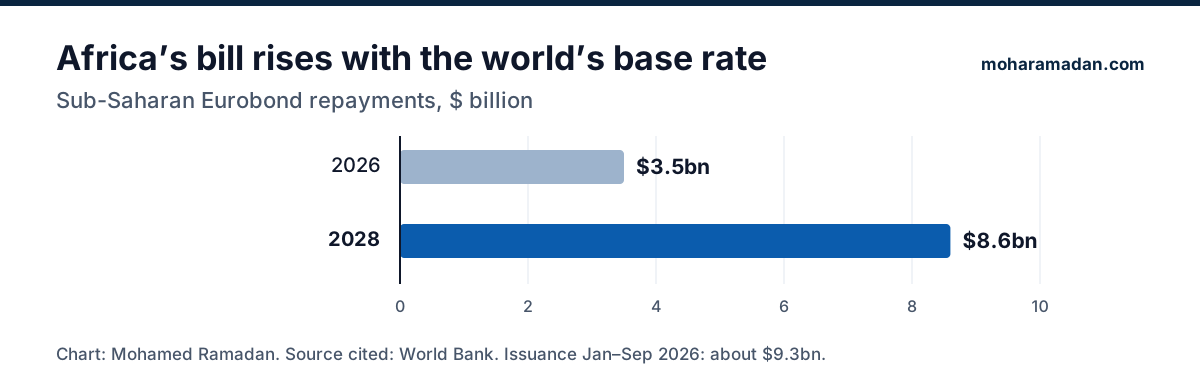
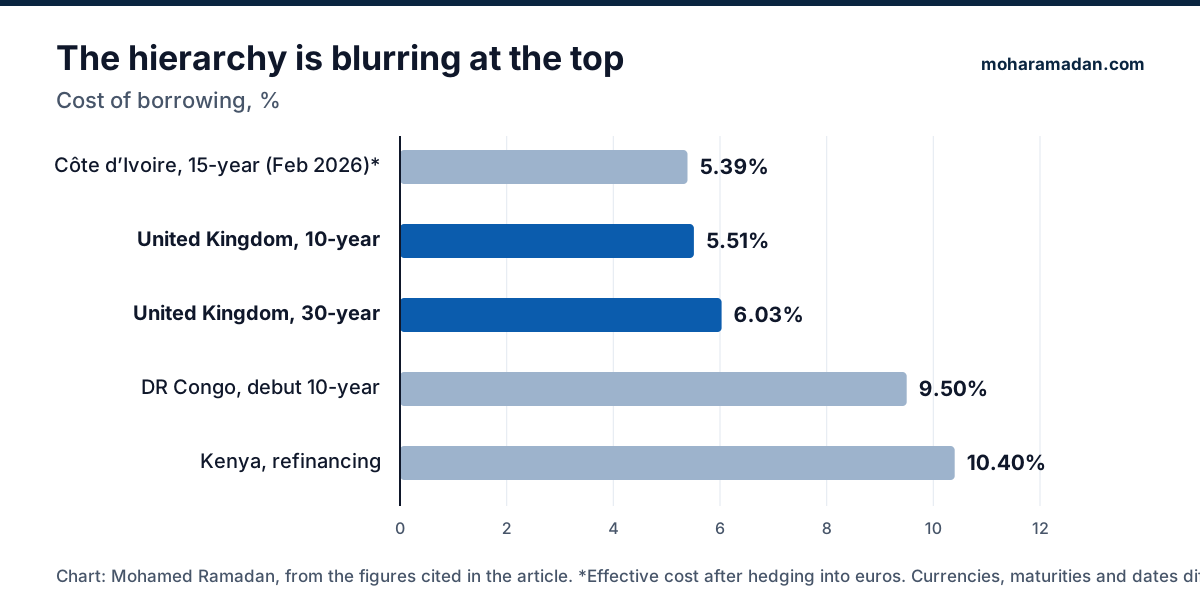
A common objection is that capital invested in African infrastructure cannot be recycled, because the pool of buyers is too thin. That picture is outdated. Domestic pension funds and insurers are growing in several markets and need long-dated, local-currency assets. Development finance institutions and strategic investors from Europe, the Gulf and Asia are active buyers of operating assets. And the appetite of international investors for African risk is visible in the bond market: in February 2026, Côte d'Ivoire's 15-year eurobond was nearly five times oversubscribed.
Exits are not automatic, and they depend on assets being built to the governance, reporting and contractual standards that buyers expect. But high-quality, cash-generating infrastructure has a wider set of potential owners than the myth suggests.
Takeaway: Liquidity follows quality. Well-structured, cash-generating assets find buyers.
Myth #4Investing in Africa means speculative greenfield risk
Development risk is real, and much of Africa's infrastructure still has to be built. But greenfield does not have to mean speculative. The projects that work tend to share the same features: a creditworthy offtaker, a long-term power purchase or availability agreement, phased capital deployment and experienced local construction partners. Capacity is built against contracted demand, not in anticipation of it.
Alongside new construction, there is a growing universe of operating assets, from power plants and telecom towers to logistics and water, where the investment thesis rests on improving existing businesses rather than building from scratch.
Takeaway: It is the investment structure, not the presence of construction, that defines the risk.
Myth #5The opportunity is too small to matter
The opposite is true. The African Development Bank has put the continent's annual infrastructure financing gap at between $68bn and $108bn. Africa is home to roughly 18 per cent of the world's population but, according to the World Bank, just 0.6 per cent of global data centre capacity. The United Nations projects that by the middle of the century roughly one person in four on the planet will be African.
Those numbers describe one of the largest and least served sources of infrastructure demand in the world, across power, transport, water and digital networks. They also describe a market in which many global investors remain heavily under-allocated.
Takeaway: The opportunity is not shrinking. It is growing faster than the capital being committed to it.
Conclusion: local knowledge unlocks a continental opportunity
Successful infrastructure investment in Africa is not about broad macroeconomic calls on "the continent". It is about understanding individual markets, identifying durable sources of demand, structuring contracts that allocate risk sensibly and working with local partners who know how projects get built and operated.
The question is no longer whether the opportunity exists. It is whether investors have the patience, the local capabilities and the discipline to reach the best of it. Those who do will finance the roads, power lines and data centres on which the next chapter of African growth depends, and they are likely to be rewarded for it.
Sources
- Moody's project finance default data, 1990–2016, as reported by Top1000funds, "Don't let fear keep Africa off limits", November 2018
- Akinwumi Adesina, citing Moody's Analytics, as reported by Nairametrics, 8 November 2023
- Global Infrastructure Hub, infrastructure debt default rates by region, based on Moody's Analytics data
- African Development Bank, African Economic Outlook 2018, and subsequent statements on the infrastructure financing gap
- World Bank, Africa's Pulse, on data centre capacity, 2026, as reported
- United Nations, World Population Prospects
- Côte d'Ivoire eurobond, February 2026, as cited in "The Price of Time"